
 Kontakt
 Wie einkaufen
Versand
Kaufberater
 Englisch
 122 b
122 b
 Lieferung in Griechenland
Bis zu 30 Tage Rückgaberecht
Kunden kauften auch




 /
/
 Broschur
 33.85
€
33.85
€






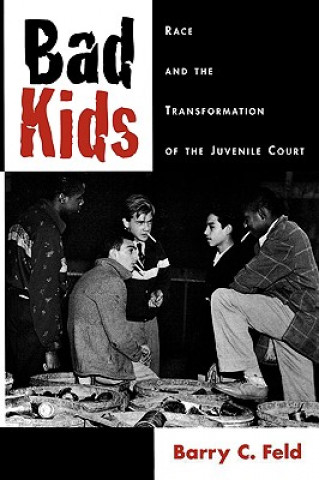
Within the past three decades, social and legal changes have transformed the juvenile court from a nominally rehabilitative welfare agency into a second-class criminal court for young offenders. Recent efforts to "toughen" juvenile justice policies have resulted in increasingly harsh sanctions that fall disproportionately on minority youths. In this provocative new book, Barry Feld examines what went wrong with the juvenile court and proposes an alternative model for youth crime control and child welfare. The Progressive reformers who created the juvenile court a century ago saw children as relatively blameless and innocent. But recent decades of rising crime rates associated with urban decay have strained this tolerant view of young offenders. Feld relates the 1967 Supreme Court decision In re Gault to the broader social and legal changes associated with the civil rights movement and the Warren Court's "Due Process Revolution." Although gault mandated more elaborate procedural safeguards in delinquency hearings, ironically, those protections legitimated the imposition of more punitive sanctions. Since Gault, Feld argues, three decades of judicial, legislative, and administrative reforms have conducted a form of "criminological triage." At the "soft end," reforms have shifted noncriminal status offenders, primarily female and white, out of the juvenile justice system into a "hidden system" made up of private sector mental health and chemical dependency facilities. At the "hard end," states transfer increasing numbers of young offenders, disproportionately minorities, to criminal court for prosecution as adults. Meanwhile, juvenile courts punish more severely those delinquents-again disproportionately minorities-who remain within the increasingly criminalized juvenile justice system. Feld attributes the current state of affairs to a conceptual flaw inherent in the juvenile court. The juvenile justice system attempts to combine social welfare and social control functions in one organization, but inevitably fulfills both missions badly because of the inherent and irreconcilable contradictions between them. Progressive reformers situated the juvenile court on a number of cultural, legal, and criminological fault lines, where the ideas of child and adult, determinism and free will, immature and responsible, treatment and punishment collide. The past three decades have witnessed a shift from the former to the latter of these binary pairs in response to the racial transformation of cities, the increase in serious youth crime, and the erosion of the rehabilitative assumptions of the juvenile court. The solution, Feld argues, is to uncouple social welfare from criminal social control. States could try all offenders in one integrated criminal justice system with appropriate modifications to accommodate the youthfulness of younger defendants: a graduated, age-culpability sentencing system, separate youth correctional facilities, and the like. Formally recognizing youthfulness as a mitigating factor would provide youths with greater protections and justice than they currently receive in either the juvenile or criminal justice systems. At the same time such a strategy would enable public policies to address directly the social welfare needs of all young people.


Informationen zum Buch
Englisch
Kategorie

Verschenken Sie dieses Buch noch heute
Es ist ganz einfach
1 Legen Sie das Buch in Ihren Warenkorb und wählen Sie den Versand als Geschenk 2 Wir schicken Ihnen umgehend einen Gutschein 3 Das Buch wird an die Adresse des beschenkten Empfängers geliefertDas könnte Sie auch interessieren

 /
/
 Adobe ePub DRM
148.34
€
Adobe ePub DRM
148.34
€



 /
Broschur
21.96
€
/
Broschur
21.96
€
 /
Hardcover
47.86
€
/
Hardcover
47.86
€







Hallo! Ich bin Libroamiko, dein Buchberater.
Wie kann ich dir helfen?