
 Kontakt
 Wie einkaufen
Versand
Kaufberater
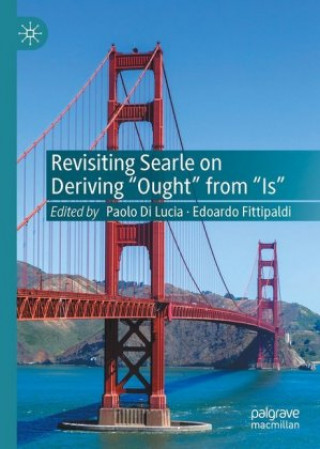
Revisiting Searle on Deriving "Ought" from "Is"
 Englisch
 309 b
309 b
 Lieferung in Griechenland
Bis zu 30 Tage Rückgaberecht
Kunden kauften auch











This book reconsiders the supposed impossibility of deriving "Ought" from "Is". John R. Searle's 1964 article How to Derive "Ought " from "Is'' sent shockwaves through the philosophical community by offering a straightforward counterexample to this claim of impossibility: from your promising something- and this is an "is" - it simply follows that you "ought" to do it. This volume opens with a brand new chapter from Searle who, in light of his subsequent philosophical developments, expounds the reasons for the validity of that derivation and its crucial significance for social ontology and moral philosophy. Then, in a fresh interview with the editors of this volume, Searle explores a range of topics including how his derivation relates to constitutive rules, and how he views Wittgenstein's philosophy, deontic logic, and the rationality of action. The remainder of the volume is dedicated to a deep dive into Searle's essay and its implications by international scholars with diverse backgrounds ranging from analytic philosophy, phenomenology, and logic, to moral philosophy and the philosophy and sociology of law. With thirteen original chapters, the contributors provide fresh and timely insights on hotly debated issues: the nature of "Ought"; the logical structure of the social world; and the possibility of deriving not only "Ought" from "Is", but "Is" from "Ought".


Informationen zum Buch
Englisch

Verschenken Sie dieses Buch noch heute
Es ist ganz einfach
1 Legen Sie das Buch in Ihren Warenkorb und wählen Sie den Versand als Geschenk 2 Wir schicken Ihnen umgehend einen Gutschein 3 Das Buch wird an die Adresse des beschenkten Empfängers geliefertDas könnte Sie auch interessieren





Hallo! Ich bin Libroamiko, dein Buchberater.
Wie kann ich dir helfen?