
 Kontakt
 Wie einkaufen
Versand
Kaufberater
 Englisch
 201 b
201 b
 Lieferung in Griechenland
Bis zu 30 Tage Rückgaberecht
Kunden kauften auch

 /
/
 Broschur
 35.68
€
35.68
€

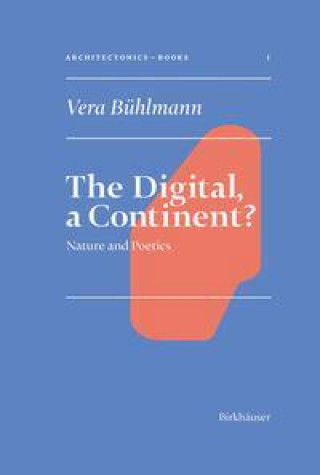
Edited by Ludger Hovestadt and Vera Bühlmann Applied Virtuality is a book series which is edited by Ludger Hovestadt, ITA Institute of Technology in Architecture, ETH Zürich, Switzerland and Vera Bühlmann, Technical University Vienna, Institute for Architectural Theory. Based on the thesis that technology changes character over time, the series aims and scopes are to reflect that change by describing and analyzing the most recent explorations and innovations in technology, as well as their implications for a more philosophically comprehensive understanding of technics in our contemporary symbolical, information saturated, climatic environments. The overall interest thereby is to (1) affirm the mightiness of the generic without embracing homogeneity as a necessary consequence, (2) to affirm calculation, computation and automatization without embracing the reduction of human intellect to mechanisation without arcane ésprit, and (3) to oppose in principle the contemporary attitude that tends towards a certain "intellectual chicness" that seems to rather narcissistically celebrate itself in a strangely detached competition for "critical divination" of soon-to-be-expected cultural doom and decay. With the birth of abstract/symbolic/universal algebra in the late 19th century, many scholars associate a fundamental crisis that affects human culture at large. We owe all of our contemporary electric and information-based infrastructures for living to these developments in mathematics, and it is no coincidence that we tend to find the symptoms that point to the manifestation of this crisis in the changes this new form of technics imposes on the people who begin to rely on it. This crisis is classically conceived as a crisis of intuition (Hans Hahn, Edmund Husserl et cetera). But from a more appreciative stance towards the sheer unlikeliness and fantastic power of intellection which is at work everywhere in the reality of such media-ized living environments, we might just as well see in this characterization an anxious (even if all-too understandable) misconception of the critical developments we are experiencing. From this stance, the sheer prominence of this misconception today indicates what appears like a certain fatigue of thinking, perhaps an exhaustion-through-overwhelming of our collective power to imagine. We mean no offence by saying this. Let us illustrate more concretely: John Orton maintains in his book Semiconductors and the Information Revolution: Magic Crystals That Made IT Happen, that "as a human achievement," semiconductors ought to "rank alongside the Beethoven Symphonies, Concord, Impressionism, medieval cathedrals and Burgundy wines and we should be equally proud of it" (2009, p. 2). Why is it, indeed, that this demand feels odd? Of course this lack of appreciating our current form of technics is owed partially to its abstractness and the degree of expertise it seems to demand from us. But has this not been the case for any of the abovementioned artifacts we all meanwhile hold as precious and dear? We hope to find the right dosage of irony and humor that seems so necessary for theorizing technics, arts, intellection in a manner that seeks to escape (1) the servile irresponsibility that attaches to programs of mechanization, as well as (2) the narrow-mindedness and missionary commitment that attaches to ideological doctrine and programmatic. By celebrating moments of intellectual quickness, with our interest in theory and abstraction, we pursue a genuinely comparatistic approach. We regard artifacts as theoretical objects, constituted by the intelligible codes and symbolic grammaticality that give them consistency. But we don't see the reality of artifacts in the white spectrum of these codes and symbols; rather, we see their reality in that which is enciphered thereby. The ambitions of a comparatistic approach to theory strive towards an alphabetization and literacy of these


Informationen zum Buch
Englisch
Kategorie

Verschenken Sie dieses Buch noch heute
Es ist ganz einfach
1 Legen Sie das Buch in Ihren Warenkorb und wählen Sie den Versand als Geschenk 2 Wir schicken Ihnen umgehend einen Gutschein 3 Das Buch wird an die Adresse des beschenkten Empfängers geliefertDas könnte Sie auch interessieren



 /
Broschur
26.08
€
/
Broschur
26.08
€


Hallo! Ich bin Libroamiko, dein Buchberater.
Wie kann ich dir helfen?