
 Επικοινωνία
 Πώς να κάνετε αγορές;
Παράδοση
Οδηγός αγορών
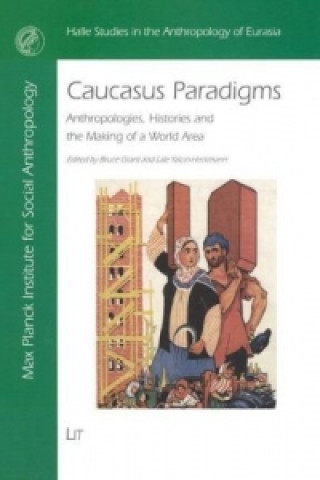
Caucasus Paradigms
Anthropologies, Histories and the Making of a World Area
 Αγγλική
 74 b
74 b
 Παράδοση στην Ελλάδα
Έως 30 ημέρες για επιστροφή
Οι πελάτες αγόρασαν επίσης



 /
/
 Χαρτόδετο
 6.77
€
6.77
€





 /
Χαρτόδετο
13.95
€
/
Χαρτόδετο
13.95
€






 /
Χαρτόδετο
17.70
€
/
Χαρτόδετο
17.70
€

 /
Χαρτόδετο
68.49
€
/
Χαρτόδετο
68.49
€



 /
Χαρτόδετο
84.98
€
/
Χαρτόδετο
84.98
€


What does it mean to know a world area, or to be part of one, for that matter? The most prominent of "Caucasus paradigms" paint a picture of a region famous not only for its cultural, linguistic, religious, political, and economic pluralisms, but for its violence, savagery, conflict, and corruption; its nobility, hospitality, natural beauty, and severity. Such paradigms present a paradox: Despite such histories of diaspora, migration, conquest, and cohabitation, the Caucasus is most often conjured as a place of closure to those "from outside". This volume seeks to turn a longstanding handicap-the perceived "unknowability" of the Caucasus-into a theme. Bringing together a dozen specialists in anthropology, linguistics, and cultural history, it identifies patterns in how the Caucasus has figured on the world stage through both politics and scholarship. By foregrounding the particular purchases of ethnographic knowledge alongside the fine tunings of cultural histories, it invites readers to reflect on pluralism and its logics in a world area where cultural difference has far too long been seen as a root cause of violence. Contributors: Levon Abrahamian, Sergei Arutiunov, Georgi Derluguian, Murtazali Gadjiev, Rebecca Gould, Bruce Grant, Erin Koch, Philip L. Kohl, Rabadan G. Magomedov, Paul Manning, Shahin Mustafayev, Anton Popov, Seteney Shami, Lale Yal


Πληροφορίες για το βιβλίο
Αγγλική

Χαρίστε αυτό το βιβλίο σήμερα
Είναι εύκολο
1 Προσθέστε το βιβλίο στο καλάθι σας και επιλέξτε παράδοση ως δώρο 2 Ως ανταμοιβή θα σας στείλουμε ένα κουπόνι 3 Το βιβλίο θα φτάσει στη διεύθυνση του παραλήπτηΜπορεί να σας ενδιαφέρει






















Γεια σας! Είμαι ο Libroamiko, ο σύμβουλος βιβλίων σας.
Πώς μπορώ να σας βοηθήσω;