
 Επικοινωνία
 Πώς να κάνετε αγορές;
Παράδοση
Οδηγός αγορών
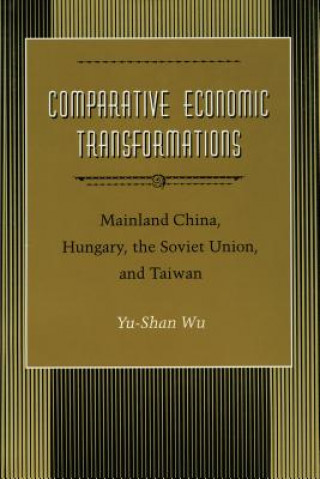
Comparative Economic Transformations
Mainland China, Hungary, the Soviet Union, and Taiwan
 Αγγλική
 209 b
209 b
 Παράδοση στην Ελλάδα
30 ημέρες για την επιστροφή των προϊόντων
Οι πελάτες αγόρασαν επίσης



 /
/
 Χαρτόδετο
 20.33
€
20.33
€

 /
Σκληρόδετο
33.18
€
/
Σκληρόδετο
33.18
€


 /
Σκληρόδετο
31.56
€
/
Σκληρόδετο
31.56
€


 /
Λίστα
21.74
€
/
Λίστα
21.74
€

This pathbreaking study illuminates the problems of economic liberalisation in authoritarian, command-economy states. It demonstrates that large structural shifts in economic policy can usefully be viewed in terms of two variables - the degree of state ownership of property, and the degree of state control of that property. Using this property rights framework, the author provides a richly detailed comparison of shifts towards 'market socialism' (state ownership without state control) in the People's Republic of China in the 1980s, the Soviet Union in the 1920s, and Hungary in the 1960s and 70s. He also looks at Taiwan's development of 'state capitalism' (private ownership with state control) in the 1950s and 60s. The book explains what factors prompt an authoritarian regime to launch reforms and, in the process, yields many insights into factors that divert the course of change.


Πληροφορίες για το βιβλίο
Αγγλική

Χαρίστε αυτό το βιβλίο σήμερα
Είναι εύκολο
1 Προσθέστε το βιβλίο στο καλάθι σας και επιλέξτε παράδοση ως δώρο 2 Ως ανταμοιβή θα σας στείλουμε ένα κουπόνι 3 Το βιβλίο θα φτάσει στη διεύθυνση του παραλήπτηΜπορεί να σας ενδιαφέρει





 /
Χαρτόδετο
8.99
€
/
Χαρτόδετο
8.99
€
 /
Σκληρόδετο
26.09
€
/
Σκληρόδετο
26.09
€
 /
Σκληρόδετο
33.18
€
/
Σκληρόδετο
33.18
€







 /
Σκληρόδετο
70.11
€
/
Σκληρόδετο
70.11
€
 /
Σκληρόδετο
168.55
€
/
Σκληρόδετο
168.55
€



 /
Σκληρόδετο
632.56
€
/
Σκληρόδετο
632.56
€