Επικοινωνία
 Πώς να κάνετε αγορές;
Παράδοση
Οδηγός αγορών
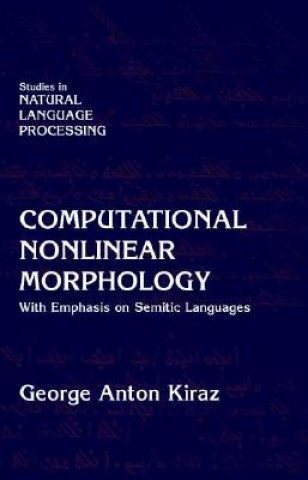
Computational Nonlinear Morphology
 Αγγλική
 268 b
268 b
 Προετοιμαζουμε
 Άγνωστος όρος
 Παράδοση στην Ελλάδα
30 ημέρες για την επιστροφή των προϊόντων
Οι πελάτες αγόρασαν επίσης






 /
/
 Χαρτόδετο
 42.74
€
42.74
€


 /
Σκληρόδετο
25.96
€
/
Σκληρόδετο
25.96
€








 /
Χαρτόδετο
25.05
€
/
Χαρτόδετο
25.05
€






 /
Χαρτόδετο
62.54
€
/
Χαρτόδετο
62.54
€





 /
Χαρτόδετο
22.22
€
/
Χαρτόδετο
22.22
€

By the late 1970s phonologists, and later morphologists, had departed from a linear approach for describing morphophonological operations to a non-linear one. Computational models, however, remain faithful to the linear model, making it very difficult, if not impossible, to implement the morphology of languages whose morphology is non-concatenative. Computational Nonlinear Morphology aims at presenting a computational system that counters the development in linguistics. It provides a detailed computational analysis of the complex morphophonological phenomena found in Semitic languages based on linguistically motivated models. The book outlines a generalized regular rewrite rule system that employs multi-tape finite-state automata to cater for root-and-pattern morphology, infixation, circumfixation and other complex operations such as the broken plural derivation problem found in Arabic and Ethiopic.


Πληροφορίες για το βιβλίο
Αγγλική

Χαρίστε αυτό το βιβλίο σήμερα
Είναι εύκολο
1 Προσθέστε το βιβλίο στο καλάθι σας και επιλέξτε παράδοση ως δώρο 2 Ως ανταμοιβή θα σας στείλουμε ένα κουπόνι 3 Το βιβλίο θα φτάσει στη διεύθυνση του παραλήπτηΜπορεί να σας ενδιαφέρει
 /
Σκληρόδετο
187.04
€
/
Σκληρόδετο
187.04
€


 /
Χαρτόδετο
18.38
€
/
Χαρτόδετο
18.38
€






 /
Χαρτόδετο
44.55
€
/
Χαρτόδετο
44.55
€





 /
Χαρτόδετο
22.22
€
/
Χαρτόδετο
22.22
€