
 Επικοινωνία
 Πώς να κάνετε αγορές;
Παράδοση
Οδηγός αγορών
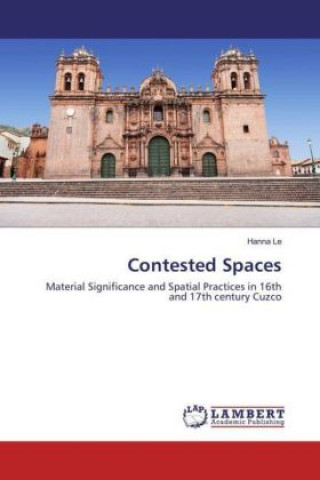
Contested Spaces
Material Significance and Spatial Practices in 16th and 17th century Cuzco
 Αγγλική
 121 b
121 b
 Παράδοση στην Ελλάδα
30 ημέρες για την επιστροφή των προϊόντων
Οι πελάτες αγόρασαν επίσης




After Spanish occupation in 1533, Cuzco transitioned from the former Inca capital into a colonial cuidad. The brick and mortar of Spanish colonial edifices and the spatial layout of seventeenth-century Cuzco were designed to reinforce socio-ethnic order, imperial Spanish authority, and the supremacy of Christianity. However, the city's inhabitants, Andean native peoples and Spanish colonizers, understood the symbolic and material significance embedded in their shared environment in significantly different ways. Whereas the Spanish based their understanding of space on Euro-Christian utopian ideals, the Inca used urban space to celebrate their ritual mastery over the unordered natural environment and its peoples. These fundamentally different worldviews, each developed before contact, continued to exist within colonial Spanish frameworks. Indeed, colonial Cuzco retained elements of its pre-Hispanic Andean identity after the Spanish occupied and redesigned it. Cuzco and its inhabitants-both Andean and Spanish-adapted to the new colonial context by integrating and indigenous elements, ideologies, and designs into a new, highly contested spatial lexicon.


Πληροφορίες για το βιβλίο
Αγγλική
Κατηγορία

Χαρίστε αυτό το βιβλίο σήμερα
Είναι εύκολο
1 Προσθέστε το βιβλίο στο καλάθι σας και επιλέξτε παράδοση ως δώρο 2 Ως ανταμοιβή θα σας στείλουμε ένα κουπόνι 3 Το βιβλίο θα φτάσει στη διεύθυνση του παραλήπτηΜπορεί να σας ενδιαφέρει









Γεια σας! Είμαι ο Libroamiko, ο σύμβουλος βιβλίων σας.
Πώς μπορώ να σας βοηθήσω;