
 Επικοινωνία
 Πώς να κάνετε αγορές;
Παράδοση
Οδηγός αγορών
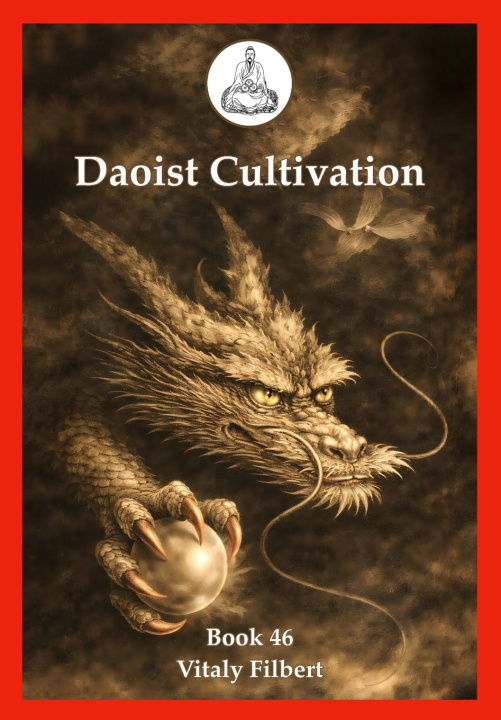
Daoist Cultivation, Book 46
The Mirror for Compounding the Medicine: Complete Translations and Commentaries on the Alchemical Teachings of Cui Xifan
 Αγγλική
 95 b
95 b
 Νέα
Νέα
 Παράδοση στην Ελλάδα
Έως 30 ημέρες για επιστροφή

The Ruyao Jing 《入藥鏡》-Mirror for Compounding the Medicine is one of the most concise and influential texts of Daoist Inner Alchemy. Traditionally attributed to the early alchemical master Cui Xifan (崔希範), its brief verses compress an entire system of Neidan into a few enigmatic formulas concerning Precelestial and Postcelestial Qi, Lead and Mercury, Dragon and Tiger, Kan and Li, the Mysterious Pass, the fire phases, the Three Treasures, the Golden Elixir, and the formation of the Sacred Embryo.
Yet the short root text is only one part of a much larger tradition.
This volume brings together and explains the principal surviving texts associated with the Ruyao Jing, allowing readers to follow the development of its teachings through several important layers of Daoist transmission.
Included are:
- • The original Ruyao Jing attributed to Cui Xifan
- • Xiao Tingzhi's extensive traditional commentary
- • Wang Daoyuan's important interpretation of the text
- • The *Upper Section of the Ruyao Jing 《入藥鏡上篇》
- • The *Middle Section of the Ruyao Jing 《入藥鏡中篇》
- • The *Tianyuan Ruyao Jing 《天元入藥鏡》-The Heavenly-Origin Mirror for Compounding the Medicine
- • Teachings traditionally connected with Lü Dongbin 呂洞賓, one of the most famous immortals and patriarchs in Daoist history
The Middle Section is especially significant because it preserves a tradition in which Lü Dongbin, the celebrated Immortal Chunyang, receives and further explains teachings associated with Cui Xifan. Whether every detail of this transmission can be established historically or not, the connection reveals the importance later Daoists assigned to the Ruyao Jing within the developing tradition of Inner Alchemy.
Throughout these works, the same fundamental questions repeatedly appear:
- What is the true Medicine?
- What are True Lead and True Mercury?
- How do Kan and Li conjoin?
- What is meant by gathering the Medicine?
- When should Fire be applied-and when must it stop?
- What is the Mysterious Pass?
- How do Essence, Qi, and Spirit return toward their original unity?
- What distinguishes ordinary energetic circulation from the true alchemical work?
- And how are Xing and Ming cultivated together?
The commentaries in this volume explain these questions without reducing the ancient symbols to simplistic modern equivalents.
Readers will encounter detailed discussions of the True Bellows, Cauldron and Furnace, Yellow Woman, Lovely Maiden, Infant, River Chariot, Three Passes, Jade Spring, Yellow Sprout, Mysterious Pearl, True Yang, Bathing, Nine Turnings, Heavenly Mechanism, and Sacred Embryo.
Particular attention is given to one of the most important principles of Neidan: the same symbol may carry different meanings according to the stage of cultivation.
This volume also discusses the complex textual history of the Ruyao Jing, including evidence for a lost Lower Section 《入藥鏡下篇》 of the expanded tradition and the variant readings and textual corruptions found in surviving editions.
For serious students of Daoism, Neidan, the Golden Elixir tradition, Lü Dongbin, classical Daoist texts, and the cultivation of Xing and Ming, this volume offers an unusually complete window into one of the foundational streams of Daoist Inner Alchemy.


Πληροφορίες για το βιβλίο
Αγγλική

Χαρίστε αυτό το βιβλίο σήμερα
Είναι εύκολο
1 Προσθέστε το βιβλίο στο καλάθι σας και επιλέξτε παράδοση ως δώρο 2 Ως ανταμοιβή θα σας στείλουμε ένα κουπόνι 3 Το βιβλίο θα φτάσει στη διεύθυνση του παραλήπτηΓεια σας! Είμαι ο Libroamiko, ο σύμβουλος βιβλίων σας.
Πώς μπορώ να σας βοηθήσω;