
 Επικοινωνία
 Πώς να κάνετε αγορές;
Παράδοση
Οδηγός αγορών
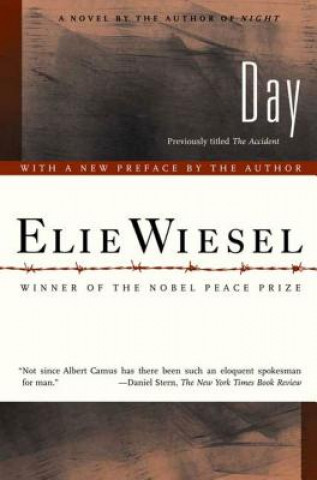
Day
 Αγγλική
 27 b
27 b
 Παράδοση στην Ελλάδα
Έως 30 ημέρες για επιστροφή
Μπορεί να σας ενδιαφέρει














 /
/
 Σκληρόδετο
 103.16
€
103.16
€



 /
Χαρτόδετο
14.48
€
/
Χαρτόδετο
14.48
€






"Not since Albert Camus has there been such an eloquent spokesman for man." "--The New York Times Book Review"""The publication of "Day "restores Elie Wiesel's original title to the novel initially published in English as "The Accident" and clearly establishes it as the powerful conclusion to the author's classic trilogy of Holocaust literature, which includes his memoir "Night" and novel "Dawn." "In "Night "it is the 'I' who speaks," writes Wiesel. "In the other two, it is the 'I' who listens and questions."In its opening paragraphs, a successful journalist and Holocaust survivor steps off a New York City curb and into the path of an oncoming taxi. Consequently, most of Wiesel's masterful portrayal of one man's exploration of the historical tragedy that befell him, his family, and his people transpires in the thoughts, daydreams, and memories of the novel's narrator. Torn between choosing life or death, "Day" again and again returns to the guiding questions that inform Wiesel's trilogy: the meaning and worth of surviving the annihilation of a race, the effects of the Holocaust upon the modern character of the Jewish people, and the loss of one's religious faith in the face of mass murder and human extermination.


Πληροφορίες για το βιβλίο
Αγγλική
Κατηγορία

Χαρίστε αυτό το βιβλίο σήμερα
Είναι εύκολο
1 Προσθέστε το βιβλίο στο καλάθι σας και επιλέξτε παράδοση ως δώρο 2 Ως ανταμοιβή θα σας στείλουμε ένα κουπόνι 3 Το βιβλίο θα φτάσει στη διεύθυνση του παραλήπτηΓεια σας! Είμαι ο Libroamiko, ο σύμβουλος βιβλίων σας.
Πώς μπορώ να σας βοηθήσω;