Επικοινωνία
 Πώς να κάνετε αγορές;
Παράδοση
Οδηγός αγορών
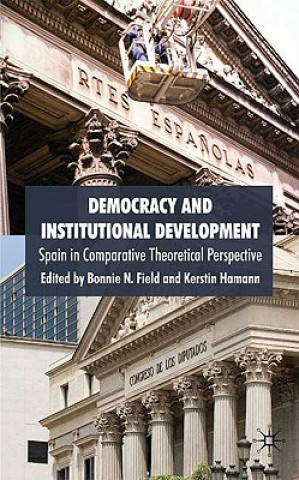
Democracy and Institutional Development
Spain in Comparative Theoretical Perspective
 Αγγλική
 141 b
141 b
 Παράδοση στην Ελλάδα
30 ημέρες για την επιστροφή των προϊόντων
Οι πελάτες αγόρασαν επίσης










 /
/
 Χαρτόδετο
 53.01
€
53.01
€






 /
Χαρτόδετο
13.35
€
/
Χαρτόδετο
13.35
€




Spain stands out as a success among countries that have transited from authoritarian rule since the mid-1970s. It has achieved democratic consolidation, institutional stability, economic growth, and international significance. Despite these successes, Spain is largely absent from cross-national studies of advanced democracies; nor has existing scholarship sufficiently analyzed post-transition Spain to determine what it can teach us about comparative politics. On the other hand, the macro successes of Spain's democracy present an overly simplified depiction and prevent a more nuanced characterization of the trade-offs, strengths, and weaknesses of Spanish democracy, which are equally important for comparative politics research. This book partially fills these gaps by analyzing Spanish political parties and institutions in comparative theoretical perspective. Two primary themes unite the book and are addressed by the chapter authors: first, institutionalization and the distribution of institutionalization in the polity, and second, the relationship between institutional design and representation.


Πληροφορίες για το βιβλίο
Αγγλική

Χαρίστε αυτό το βιβλίο σήμερα
Είναι εύκολο
1 Προσθέστε το βιβλίο στο καλάθι σας και επιλέξτε παράδοση ως δώρο 2 Ως ανταμοιβή θα σας στείλουμε ένα κουπόνι 3 Το βιβλίο θα φτάσει στη διεύθυνση του παραλήπτηΜπορεί να σας ενδιαφέρει















 /
Χαρτόδετο
18.00
€
/
Χαρτόδετο
18.00
€






 /
Χαρτόδετο
38.13
€
/
Χαρτόδετο
38.13
€