
 Επικοινωνία
 Πώς να κάνετε αγορές;
Παράδοση
Οδηγός αγορών
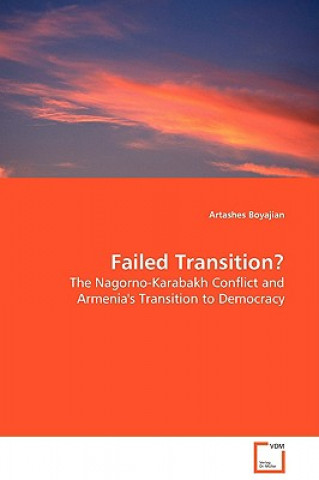
Failed Transition?
The Nagorno-Karabakh Conflict and Armenia's Transition to Democracy
 Αγγλική
 131 b
131 b
 Παράδοση στην Ελλάδα
Έως 30 ημέρες για επιστροφή
Οι πελάτες αγόρασαν επίσης




 /
/
 Βιβλίο
 19.92
€
19.92
€














 /
Χαρτόδετο
34.29
€
/
Χαρτόδετο
34.29
€


 /
Χαρτόδετο
20.33
€
/
Χαρτόδετο
20.33
€



 /
Χαρτόδετο
19.11
€
/
Χαρτόδετο
19.11
€

Using the two-level game model first proposed by §Robert Putnam in 1988, this book analyzes the impact §of domestic variables (ethnic composition, §institutional constraints, economic development, and §the civil society) on shaping the policy of §intervention in the Nagorno-Karabakh conflict in the §early 1990s by Armenia s first democratically §elected leaders. Then it looks at how the conflict §in Nagorno-Karabakh, in turn, affected the §trajectory of Armenia s transition to democracy. The §discussion of a number of domestic factors §contributing to the failure of democratic §consolidation in post-Soviet Armenia follows. §Parallels are drawn between Armenia and two other §post-socialist countries in the conflict situation, §Yugoslavia and Czechoslovakia, with specific §emphasis on quality of leadership of the elites. §Finally, two early successful anti-communist §democratizers, Armenia and Poland, are compared, and §the later divergence of their political paths is §analyzed.


Πληροφορίες για το βιβλίο
Αγγλική

Χαρίστε αυτό το βιβλίο σήμερα
Είναι εύκολο
1 Προσθέστε το βιβλίο στο καλάθι σας και επιλέξτε παράδοση ως δώρο 2 Ως ανταμοιβή θα σας στείλουμε ένα κουπόνι 3 Το βιβλίο θα φτάσει στη διεύθυνση του παραλήπτηΜπορεί να σας ενδιαφέρει











 /
Χαρτόδετο
15.57
€
/
Χαρτόδετο
15.57
€













Γεια σας! Είμαι ο Libroamiko, ο σύμβουλος βιβλίων σας.
Πώς μπορώ να σας βοηθήσω;