
 Επικοινωνία
 Πώς να κάνετε αγορές;

Παράδοση
Οδηγός αγορών
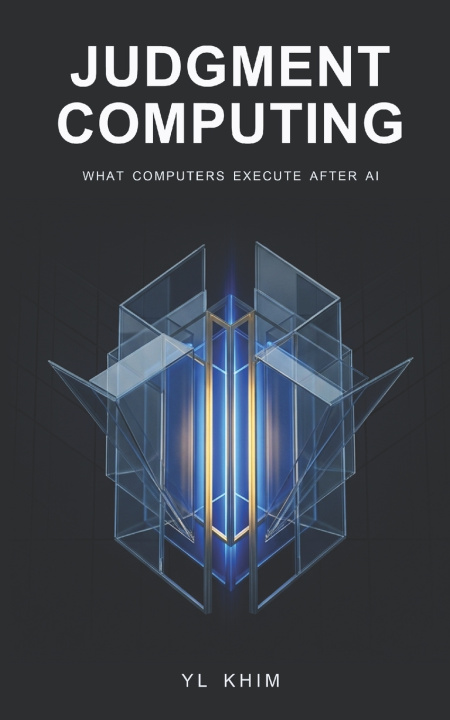
Judgment Computing - What Computers Execute After AI
Intelligence alone is not enough - Anticipating the next era of computing through Work, Intent, Context, and Judgment
 Αγγλική
 29 b
 Προετοιμαζουμε
 Νέα
 Παράδοση στην Ελλάδα
Έως 30 ημέρες για επιστροφή

AI has dramatically lowered the burden of explaining to machines how something must be done. Yet reducing the burden of explanation does not mean the fundamental challenges of computing have disappeared. Rather, deeper questions-long hidden behind the barrier of manual instruction-are rising to the surface.
When computers begin generating answers and taking autonomous action, what becomes the central unit of human work? How does an ambiguous sentence become a verifiable contract rather than reckless guesswork? How must context be preserved so interrupted work can resume without losing its rationale? And when capability expands faster than trust, where does deterministic enforcement end-and where must human judgment remain sovereign?
Judgment Computing traces the evolution of computing through the lens of translation cost-from Commands, Applications, and Workflows to Work, Intent, Context, Governance, and Judgment:
• Part I-II: Why window- and app-centric computing fragments human thought, and how work can be assembled directly around composable capabilities.
• Part III-IV: Why intent demands explicit Intent Contracts, multi-tiered program representations, and persistent causal memory rather than disposable prompts.
• Part V-VI: Why intelligence is not trust, why safety requires architectural boundaries ("Physics Over Policy") and constitutional invariants, and how systems must yield final authority when competing good values collide.
• Appendices A-C: Structural taxonomy, 13 core conceptual definitions, and an exploratory operational reference architecture coupling the four pillars into a closed-loop lifecycle.
Intelligence expands capability. But capability does not establish authority.
Written by an everyday observer following a single practical friction to its architectural conclusion, this book asks what computers will truly need to execute in the era after AI.


Πληροφορίες για το βιβλίο
Αγγλική

Χαρίστε αυτό το βιβλίο σήμερα
Είναι εύκολο
1 Προσθέστε το βιβλίο στο καλάθι σας και επιλέξτε παράδοση ως δώρο 2 Ως ανταμοιβή θα σας στείλουμε ένα κουπόνι 3 Το βιβλίο θα φτάσει στη διεύθυνση του παραλήπτηΓεια σας! Είμαι ο Libroamiko, ο σύμβουλος βιβλίων σας.
Πώς μπορώ να σας βοηθήσω;