Επικοινωνία
 Πώς να κάνετε αγορές;
Παράδοση
Οδηγός αγορών
 Αγγλική
 162 b
162 b
 Παράδοση στην Ελλάδα
30 ημέρες για την επιστροφή των προϊόντων
Οι πελάτες αγόρασαν επίσης




 /
/
 Χαρτόδετο
 40.16
€
40.16
€




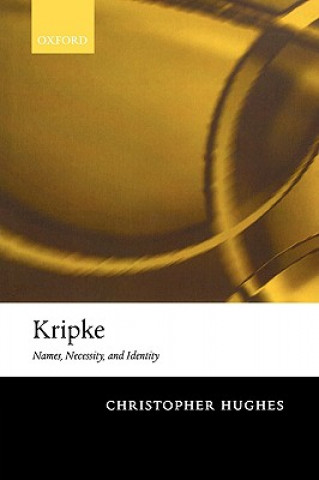
Saul Kripke, in a series of classic writings of the 1960s and 1970s, changed the face of metaphysics and philosophy of language. Christopher Hughes offers a careful exposition and critical analysis of Kripke's central ideas about names, necessity, and identity. He clears up some common misunderstandings of Kripke's views on rigid designation, causality and reference, the necessary and the contingent, the a posteriori and the a priori. Through his engagement with Kripke's ideas Hughes makes a significant contribution to ongoing debates on, inter alia, the semantics of natural kind terms, the nature of natural kinds, the essentiality of origin and constitution, the relative merits of 'identitarian' and counterpart-theoretic accounts of modality, and the identity or otherwise of mental types and tokens with physical types and tokens. No specialist knowledge in either the philosophy of language or metaphysics is presupposed; Hughes's book will be valuable for anyone working on the ideas which Kripke made famous in the philosophy world.


Πληροφορίες για το βιβλίο
Αγγλική

Χαρίστε αυτό το βιβλίο σήμερα
Είναι εύκολο
1 Προσθέστε το βιβλίο στο καλάθι σας και επιλέξτε παράδοση ως δώρο 2 Ως ανταμοιβή θα σας στείλουμε ένα κουπόνι 3 Το βιβλίο θα φτάσει στη διεύθυνση του παραλήπτηΜπορεί να σας ενδιαφέρει






 /
Σκληρόδετο
101.27
€
/
Σκληρόδετο
101.27
€