
 Επικοινωνία
 Πώς να κάνετε αγορές;

Παράδοση
Οδηγός αγορών
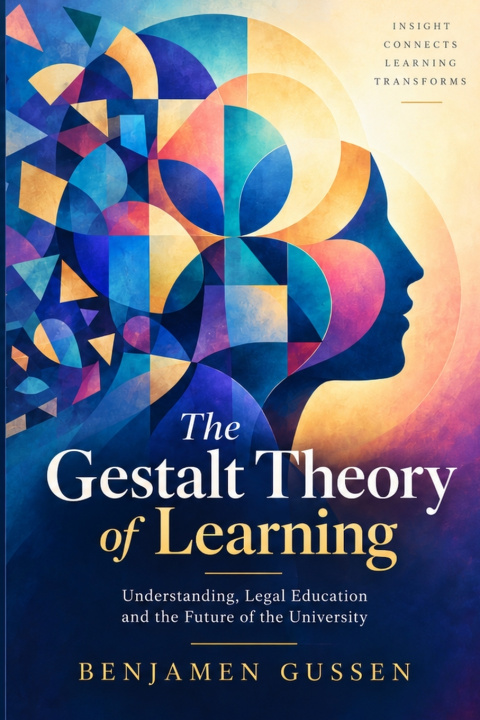
The Gestalt Theory of Learning
Understanding, Legal Education and the Future of the University
 Αγγλική
 184 b
 Νέα
 Παράδοση στην Ελλάδα
Έως 30 ημέρες για επιστροφή

What is a university for when artificial intelligence can produce the answers?
In The Gestalt Theory of Learning, Benjamen Gussen challenges a familiar assumption: that more content, more teaching and more assessment necessarily mean more learning. Drawing on Gestalt psychology and his experience in legal education, he argues that the decisive work of higher education is psychological: helping people recognise relationships, develop insight and reorganise their understanding when an established interpretation no longer holds.
At the heart of the book is a demanding interpretation of "less is more". Fewer compulsory activities should create space for deeper inquiry, not excuse inadequate support. Gussen develops a model of stressless learning that removes avoidable fear and overload while preserving intellectual challenge. The lecturer becomes scholarly counsel, students pursue self-paced inquiry and self-organising collaboration, and one substantial final project replaces continual grading. AI is welcomed throughout-not merely tolerated-while the resulting work must remain accurate, justified and accountable.
The argument comes to life through constitutional law teaching and a proposed first-year contracts unit. Comparing judgments, reconstructing judicial reasoning and redesigning legislation become opportunities for students to discover significant connections and produce defensible innovations with AI. The book also provides practical assessment ideas and a reusable project brief.
Gestalt is placed in critical dialogue with heutagogy, adult learning, cognitive approaches, experiential learning, constructionism and other influential traditions. Rather than declaring these alternatives obsolete, Gussen examines their similarities, differences and challenges to his proposal.
The discussion then moves beyond the classroom. What should an AI-enabled qualification certify? Should the authority to evaluate be separated from the relationship that supports learning? How can universities respond to employment uncertainty, unequal access and dependence on commercial platforms without abandoning scholarship or their public responsibilities?
Written for educators, university leaders, researchers, policymakers and readers concerned with the future of learning, this book offers a rigorous and humane vision of tertiary education: less preoccupied with administering activity, and more committed to understanding, judgment and worthwhile contribution.
The challenge is not to keep AI outside the university. It is to decide what the university should make possible with it.


Πληροφορίες για το βιβλίο
Αγγλική

Χαρίστε αυτό το βιβλίο σήμερα
Είναι εύκολο
1 Προσθέστε το βιβλίο στο καλάθι σας και επιλέξτε παράδοση ως δώρο 2 Ως ανταμοιβή θα σας στείλουμε ένα κουπόνι 3 Το βιβλίο θα φτάσει στη διεύθυνση του παραλήπτηΓεια σας! Είμαι ο Libroamiko, ο σύμβουλος βιβλίων σας.
Πώς μπορώ να σας βοηθήσω;