
 Επικοινωνία
 Πώς να κάνετε αγορές;
Παράδοση
Οδηγός αγορών
 Αγγλική
 140 b
140 b
 Παράδοση στην Ελλάδα
Έως 30 ημέρες για επιστροφή
Οι πελάτες αγόρασαν επίσης







 /
/
 Χαρτόδετο
 17.37
€
17.37
€

 /
Σκληρόδετο
24.15
€
/
Σκληρόδετο
24.15
€






 /
Χαρτόδετο
11.71
€
/
Χαρτόδετο
11.71
€

 /
Χαρτόδετο
26.88
€
/
Χαρτόδετο
26.88
€


 /
Χαρτόδετο
10.40
€
/
Χαρτόδετο
10.40
€








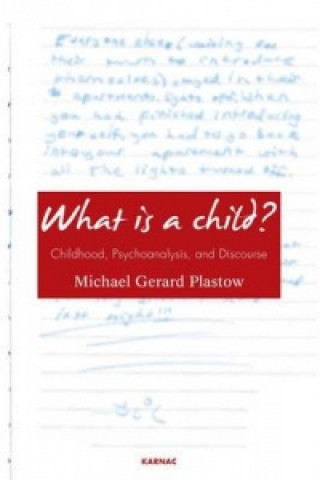
Childhood is defined in different preconceived manners by different discourses. Thus the categories defined by age such as infant, child, adolescent and so on, are to some extent arbitrary divisions that are subject to the evolution in clinical, societal, ideological and political discourses. Within psychoanalysis there has been a conflation of childhood construed through the retrospective memories of adults, and childhood as seen through the perspective of infant observations. In What is a Child? Michael Gerard Plastow argues that the place of the child as subject in the fullest sense has been neglected through these tendencies, and that such confusion has marked the history of the psychoanalysis of the child itself, which began as a family affair.In this book, Plastwo endeavours to tease out the different notions of time and history that are implicit in the history of child psychoanalysis and in the clinical approach to childhood. He closely examines the beginnings of psychoanalysis of the child, particularly emphasising the contributions of Hermine Hug-Hellmuth. It was she who emphasised the impossibility for parents to analyse their own children. This contribution also enabled her to theorize the place of the parents in relation to the analysis of a child. The author also examines the history of the discourses that have determined how we consider childhood and thus conceive of the child. In his conlcusion, Plastow returns to the questions of the child, the parents, and the symptom, as well as the notion of 'cause', in order to examine the implications of this study for clinical practice with children and their families.


Πληροφορίες για το βιβλίο
Αγγλική

Χαρίστε αυτό το βιβλίο σήμερα
Είναι εύκολο
1 Προσθέστε το βιβλίο στο καλάθι σας και επιλέξτε παράδοση ως δώρο 2 Ως ανταμοιβή θα σας στείλουμε ένα κουπόνι 3 Το βιβλίο θα φτάσει στη διεύθυνση του παραλήπτηΜπορεί να σας ενδιαφέρει


















 /
Χαρτόδετο
20.51
€
/
Χαρτόδετο
20.51
€



 /
Leporelo
8.68
€
/
Leporelo
8.68
€
 /
Χαρτόδετο
26.17
€
/
Χαρτόδετο
26.17
€
Γεια σας! Είμαι ο Libroamiko, ο σύμβουλος βιβλίων σας.
Πώς μπορώ να σας βοηθήσω;